
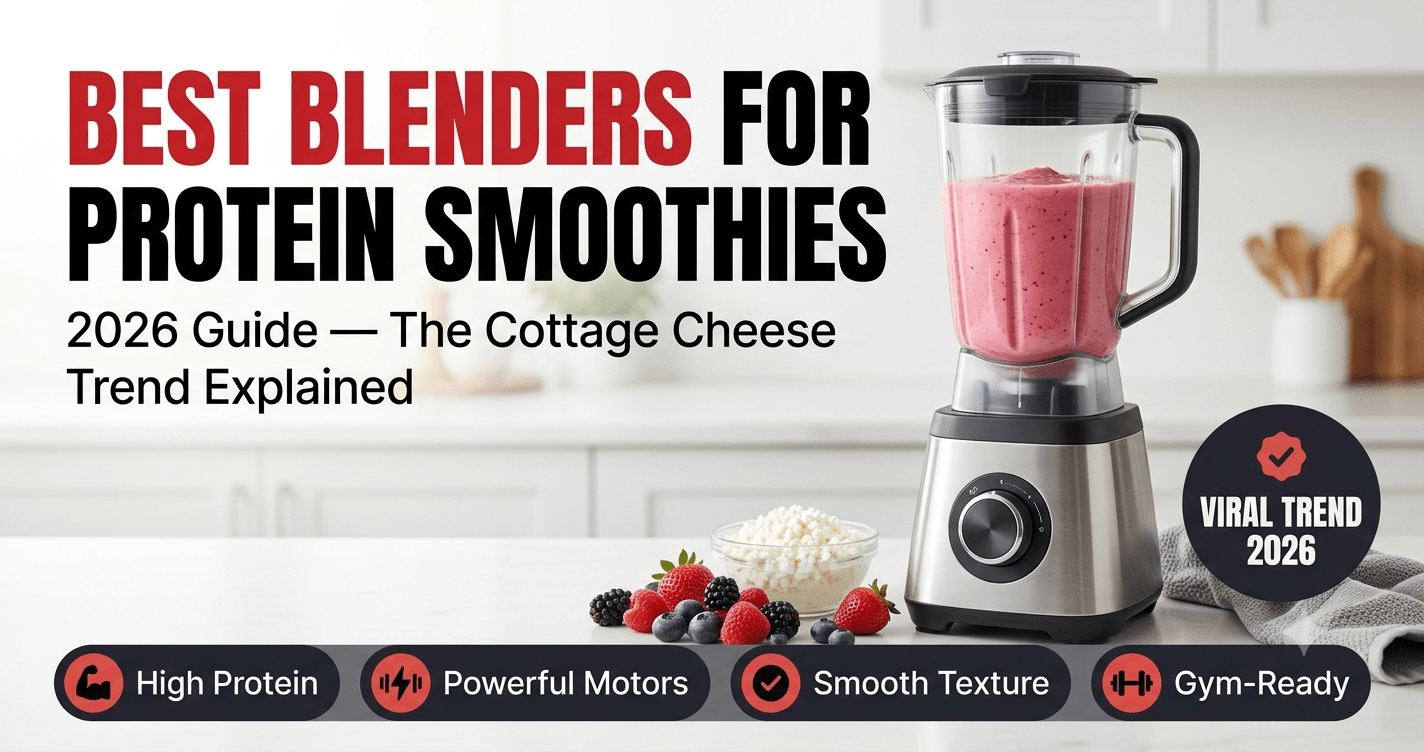
Best Blenders for Protein Smoothies in 2026 — The Cottage Cheese Trend Explained
Finding the best blenders for protein smoothies became a real question for me after my gym buddy texted last month asking what blender I use — she’d just tried blending cottage cheese into a smoothie for the first time and ended up with lumps floating in what was supposed to be a protein shake. Turns out this is one of 2026’s biggest food trends — and also one that exposes which blenders can actually handle it and which ones can’t.
Cottage cheese smoothies have taken over social feeds for a good reason: one cup packs roughly 25-28 grams of protein, way more than the same amount of Greek yogurt, and blended smooth it tastes closer to cheesecake than diet food. But that curdled texture is genuinely harder on a blender than a banana. Here’s what actually gets it smooth.
Quick Comparison Table:
| Model | Price | Power | Best For |
|---|---|---|---|
| Ninja BlendBOSS | ~$139 | 1,200W | Best overall, gym-ready |
| NutriBullet Ultra | ~$124 | 1,200W | Smoothest texture |
| Ninja Nutri-Blender Pro | ~$60 | 1,100W peak | Best value |
| Hamilton Beach Portable | ~$25 | Lower power | Budget, try the trend |
1. Ninja BlendBOSS — Best Overall, Gym-Ready
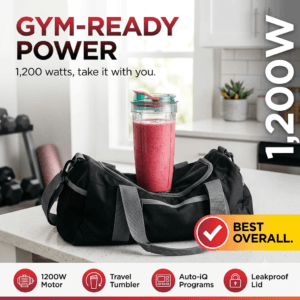
Cottage cheese curds need real motor power to fully break down, and the BlendBOSS’s 1,200 peak watts handles it without needing a second blend cycle. Since this is genuinely a post-workout, take-it-with-you kind of smoothie for a lot of people, the built-in travel tumbler is a legitimately useful match here, not just a gimmick.
We cover this one in more depth in our best tumbler blenders guide.
2. NutriBullet Ultra — Smoothest Texture
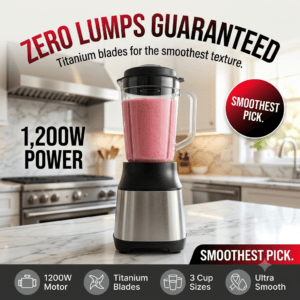
If getting a completely lump-free result matters most to you, the titanium-coated blades and 1,200-watt motor here consistently produce the smoothest texture of anything in this lineup. It takes cottage cheese from “chunky” to “milkshake” in one cycle, which not every blender manages.
3. Ninja Nutri-Blender Pro (Auto-iQ) — Best Value
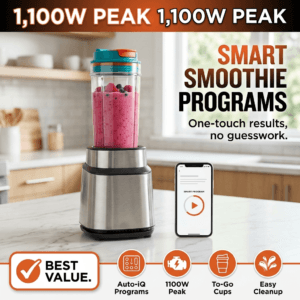
At 1,100 peak watts with an Auto-iQ smoothie program, this handles cottage cheese well without the premium price tag of the top two picks. It’s the one to get if you want reliably smooth results without paying for features you won’t use.
4. Hamilton Beach Portable — Budget, Try the Trend
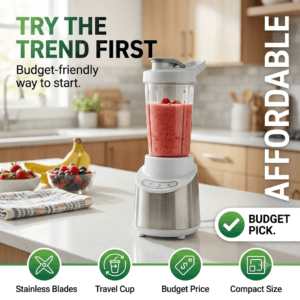
Honest take: this won’t produce quite as smooth a result with cottage cheese as the pricier options, and you may need to blend a bit longer or accept slightly more texture. But if you just want to try the trend for a few weeks before committing to something pricier, it gets the job done.
Once you’ve picked from the best blenders for protein smoothies above, here are a few recipes worth trying first:
Simple Cottage Cheese Smoothie Recipes to Try
Berry Protein Smoothie: Blend 1 cup cottage cheese, 1 cup mixed frozen berries, 1/2 cup milk, and a drizzle of honey until completely smooth.
Peanut Butter Banana Shake: Blend 1 cup cottage cheese, 1 frozen banana, 1 tablespoon peanut butter, and 1/2 cup milk with a handful of ice.
Chocolate Protein Shake: Blend 1 cup cottage cheese, 1 tablespoon cocoa powder, 1 frozen banana, and 3/4 cup milk until smooth.
What Actually Matters When Choosing the Best Blenders for Protein Smoothies
Add your liquid before the cottage cheese, not after — it helps the blades get moving instead of grinding against dense curds right away. Plan on blending 30-60 seconds longer than you would for a regular fruit smoothie, even with a powerful motor.
For general guidance on protein intake and healthy dietary sources, the USDA’s protein foods guidelines are a solid reference point.
FAQ
Why does my cottage cheese smoothie come out lumpy?
Usually underpowered blending or not enough liquid. Lower-wattage blenders sometimes need extra time, or a splash more milk, to fully break down the curds.
Is cottage cheese actually good in smoothies nutritionally?
Yes — it’s a genuinely strong protein source (around 25-28 grams per cup) with a mild tang that blends well with fruit and sweeteners, without needing added protein powder.
Can I use any blender for cottage cheese smoothies?
Most blenders can technically do it, but lower-powered ones often leave more texture behind. A motor in the 1,000+ watt range consistently produces smoother results.
Prices mentioned are approximate and may vary. Always check current Amazon pricing before purchasing. Some links on this page may be affiliate links — we earn a small commission at no extra cost to you.
What’s the single most important feature in the best blenders for protein smoothies?
Raw motor power. A blender under 1,000 watts can usually still manage it, but consistently smooth results without leftover lumps come down to how much power the motor has, more than any other single feature.
At the end of the day, the best blenders for protein smoothies come down to how smooth you actually want the result — casual trend-tryers can start with a budget pick, while daily gym-goers benefit more from investing in real motor power upfront.
Also read: Best Personal Blenders in 2026, and Best Tumbler Blenders in 2026.