
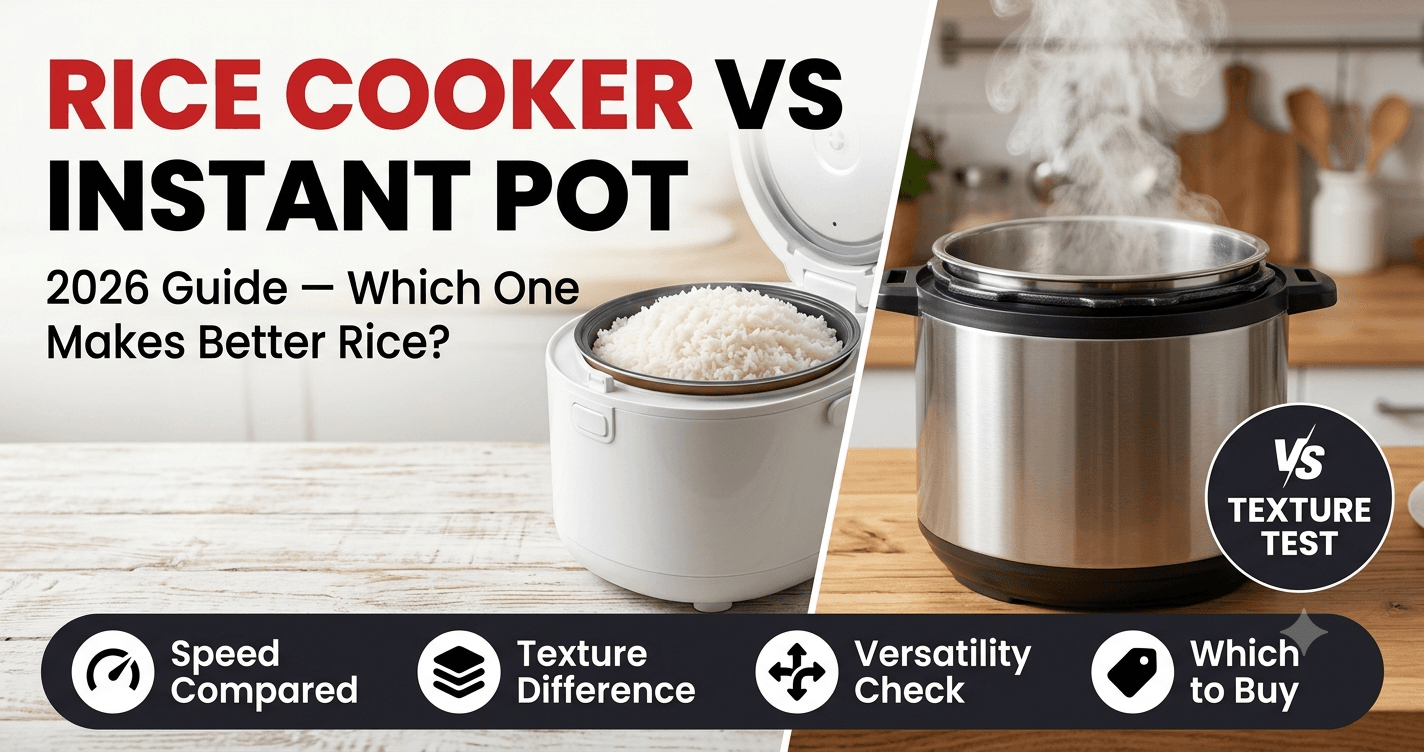
Rice Cooker vs Instant Pot in 2026 — Which One Makes Better Rice?
The rice cooker vs Instant Pot debate comes up constantly for anyone who eats rice regularly, especially since Instant Pot marketing suggests it can replace almost every appliance in your kitchen, rice cooker included. The honest answer is more nuanced than “one replaces the other” — they approach rice completely differently, and the difference actually shows up in the final texture.
Quick Comparison Table:
| Factor | Rice Cooker | Instant Pot |
|---|---|---|
| Cooking method | Gentle steam, max ~212°F | High-pressure, sealed |
| White rice cook time | ~20 minutes | ~6 minutes (plus pressure build-up) |
| Rice texture | Fluffy, distinct, separated grains | Can be moister, occasionally clumpy |
| Best rice type | All types, especially delicate grains | Best for long-grain white rice specifically |
| Versatility | Rice-focused, some steam basic use | Pressure cook, sauté, steam, yogurt, more |
| Power usage | 400-700W | 1,000W+ during pressure cycles |
Adedicated rice cooker works by gently heating water until it boils and evaporates into the rice, a process that naturally caps out around 212°F. This slower, gentler method lets grains absorb moisture evenly, producing the fluffy, distinct, separated texture that rice enthusiasts specifically look for — especially with jasmine, basmati, or other aromatic varieties.
An Instant Pot cooks rice under pressure, finishing in a fraction of the time, but the sealed, high-moisture environment can leave rice slightly clumpier or moister than a dedicated cooker produces. The Instant Pot’s rice button is also specifically tuned for long-grain white rice — other varieties often need manual pressure cook settings and some trial and error to get right.
Where the Rice Cooker Wins
If rice is a near-daily staple in your house, the consistency and texture advantage of a dedicated rice cooker is genuinely noticeable, especially with premium fuzzy-logic models. Rice cookers also tend to use meaningfully less electricity per cook (400-700W versus 1,000W+ for an Instant Pot’s pressure cycle), and the simplicity — pour, press one button, walk away — is hard to beat for a single-purpose task.
Where the Instant Pot Wins
If you’re trying to consolidate appliances, the Instant Pot’s versatility is the clear advantage — it pressure cooks meat, sautés, steams vegetables, and makes yogurt, none of which a rice cooker can attempt. It’s also faster for rice specifically when you’re in a hurry, even if the texture trade-off matters to some cooks more than others.
Rice Cooker vs Instant Pot: So Which Should You Actually Buy?
If you eat rice frequently and care about texture specifically, a dedicated rice cooker (especially a fuzzy-logic model) is worth owning even alongside an Instant Pot.
Check Price On Amazon — Zojirushi Neuro Fuzzy Rice Cooker
If counter space or budget only allows one appliance and your cooking goes well beyond rice, the Instant Pot’s versatility covers more ground, even if its rice isn’t quite as refined.
Check Price On Amazon — Instant Pot RIO 7-in-1
What Actually Matters Before You Buy
When deciding rice cooker vs Instant Pot, don’t choose based on speed alone. If rice texture genuinely matters to your meals — not just “rice as a side” but rice as a meaningful part of the dish — the dedicated cooker’s gentler method produces a noticeably better result that the Instant Pot’s speed doesn’t offset.
Also factor in how often you actually eat rice versus how often you’d use an Instant Pot’s other functions. Someone eating rice daily benefits more from a dedicated cooker’s consistency; someone cooking rice occasionally alongside other varied meals gets more value from one versatile appliance.
For food safety guidance on cooked rice storage and reheating, check the USDA’s guidelines on safe food handling to avoid common rice-related foodborne illness risks.
FAQ
In the rice cooker vs Instant Pot debate, can an Instant Pot completely replace a rice cooker?
For basic long-grain white rice, largely yes. For other rice varieties or if texture matters significantly to you, a dedicated rice cooker still produces noticeably better results.
Why does Instant Pot rice sometimes come out clumpy or mushy?
The sealed, pressurized cooking environment retains more moisture than a rice cooker’s gentle steam method, which can affect texture, especially if water ratios aren’t adjusted specifically for pressure cooking.
Is it worth owning both a rice cooker and an Instant Pot?
For the rice cooker vs Instant Pot question, if you eat rice often and also do a lot of pressure cooking, sautéing, or steaming, owning both isn’t redundant — they genuinely serve different primary purposes despite some overlap.
Prices mentioned are approximate and may vary. Always check current Amazon pricing before purchasing. Some links on this page may be affiliate links — we earn a small commission at no extra cost to you.
Also read: Best Rice Cookers in 2026, Best Instant Pot Pressure Cookers in 2026, Instant Pot vs Air Fryer in 2026, and Best Instant Pot for Beginners in 2026.