
Instant Pot Cooking Times Chart — Meat, Beans, Rice & Vegetables (2026)
The most common question I get about instant pot cooking times isn’t about recipes — it’s timing. How long for chicken breasts? Why do my beans come out mushy? What’s the actual difference between natural and quick release, and when do I use which one? After enough trial and error (and a few overcooked pot roasts), here’s the reference chart I wish I’d had from day one.
A Quick Note Before You Start
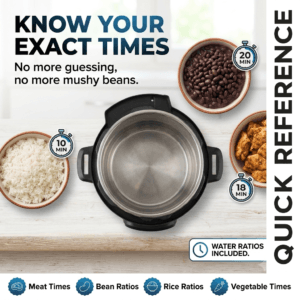
These times are for the pressure cooking cycle only — they don’t include the 5-15 minutes it takes to come to pressure, or the release time afterward (1-2 minutes for quick release, 10-30 minutes for natural release). Factor both into your total cooking time when planning a meal.
Meat & Poultry
| Food | Time (High Pressure) | Release | Notes |
|---|---|---|---|
| Chicken breast (fresh, boneless) | 8-10 min | Quick release | Add 50% more time from frozen |
| Chicken thighs (bone-in) | 10-12 min | Natural release, 10 min | Skin removed cooks more evenly |
| Whole chicken (3-4 lbs) | 25-30 min | Natural release, 15 min | Use trivet, add 1 cup liquid |
| Beef stew meat (1-inch cubes) | 20-25 min | Natural release, 15 min | Longer for more tender results |
| Pork shoulder (2-3 lbs) | 60-70 min | Natural release, 15 min | Larger cuts need proportionally more time |
| Ground beef/turkey | 4-5 min | Quick release | Break apart before sealing lid |
Beans, Rice & Grains
| Food | Water Ratio | Time (High Pressure) | Release |
|---|---|---|---|
| White rice | 1:1 | 3-4 min | Natural release, 10 min |
| Brown rice | 1:1.25 | 22-25 min | Natural release, 10 min |
| Dried black beans (unsoaked) | 1:3 | 25-30 min | Natural release |
| Dried chickpeas (unsoaked) | 1:3 | 35-40 min | Natural release |
| Lentils (red, unsoaked) | 1:2 | 8-10 min | Quick release |
| Quinoa | 1:1.25 | 1-2 min | Natural release, 10 min |
Vegetables
| Food | Time (High Pressure) | Release | Notes |
|---|---|---|---|
| Potatoes (whole, medium) | 12-15 min | Natural release, 10 min | Larger potatoes need more time |
| Carrots (chunks) | 3-4 min | Quick release | Thin slices cook faster |
| Broccoli florets | 1-2 min | Quick release | Very quick to avoid mush |
| Corn on the cob | 3-4 min | Quick release | Fresh or frozen, same time |
| Sweet potatoes (whole) | 15-20 min | Natural release, 10 min | Pierce skin before cooking |
Natural Release vs. Quick Release: What Actually Matters
Natural release means letting pressure drop on its own over time, which continues gently cooking food and helps tougher cuts of meat, beans, and grains finish tenderizing without a jarring pressure drop. Quick release means manually venting the steam valve immediately, stopping the cooking process right away — better for foods that overcook easily, like vegetables or delicate proteins.
As a general rule: meats and beans usually benefit from at least some natural release time, while quick-cooking vegetables and rice dishes with a risk of foam clogging the valve do better with quick release.
Instant Pot Cooking Times: What Actually Matters Beyond the Chart
Altitude genuinely affects cooking times — if you live above 3,000 feet, add roughly 5% more time for every 1,000 feet above that baseline, since water boils at a lower temperature and pressure builds differently.
Frozen versus fresh matters more than most charts account for. As a rule of thumb, add about 50% more time for frozen meat compared to fresh, and always verify doneness with a thermometer rather than relying on time alone for larger cuts.
For official guidance on safe internal cooking temperatures for meat and poultry, check the USDA’s food safety chart to confirm your protein reaches a safe temperature regardless of the pressure cooking time listed.
For official guidance on safe internal cooking temperatures for meat and poultry, check the USDA’s food safety chart to confirm your protein reaches a safe temperature regardless of the pressure cooking time listed.
Want Perfectly Timed Results Every Time?
If you’re constantly guessing at instant pot cooking times for meat specifically, a reliable Instant Pot with precise timer controls makes a real difference. Our top pick, the Instant Pot Duo Plus 9-in-1, has smart programs that take much of the guesswork out of these times.
If soup or stew is your main use case, our dedicated guide on the best Instant Pot for soup and stew season breaks down which models handle the sauté-then-simmer combination best.
FAQ
Do I need to adjust instant pot cooking times for a 3-quart or 8-quart model?
Most charts (including this one) are based on a standard 6-quart Instant Pot. Times are generally similar across sizes, but larger pots may need slightly longer to come to pressure initially due to more liquid volume.
Why did my beans come out undercooked even after following the chart?
Old, dried beans (over a year old) take noticeably longer to cook than fresher dried beans. If beans are still firm after the listed time, reseal and add 5-10 more minutes rather than assuming the chart is wrong.
Can I use quick release for meat dishes?
For instant pot cooking times specifically involving meat, you can use quick release, but natural release (at least partially) generally produces more tender results, since the gradual pressure drop allows muscle fibers to relax rather than seizing up from a sudden pressure change.
Prices mentioned are approximate and may vary. Some links on this page may be affiliate links — we earn a small commission at no extra cost to you.
Also read: Best Instant Pot Pressure Cookers in 2026, Instant Pot vs Slow Cooker in 2026, Best Instant Pot Accessories in 2026, and our full range of air fryer guides, including our Air Fryer Cooking Times Chart.